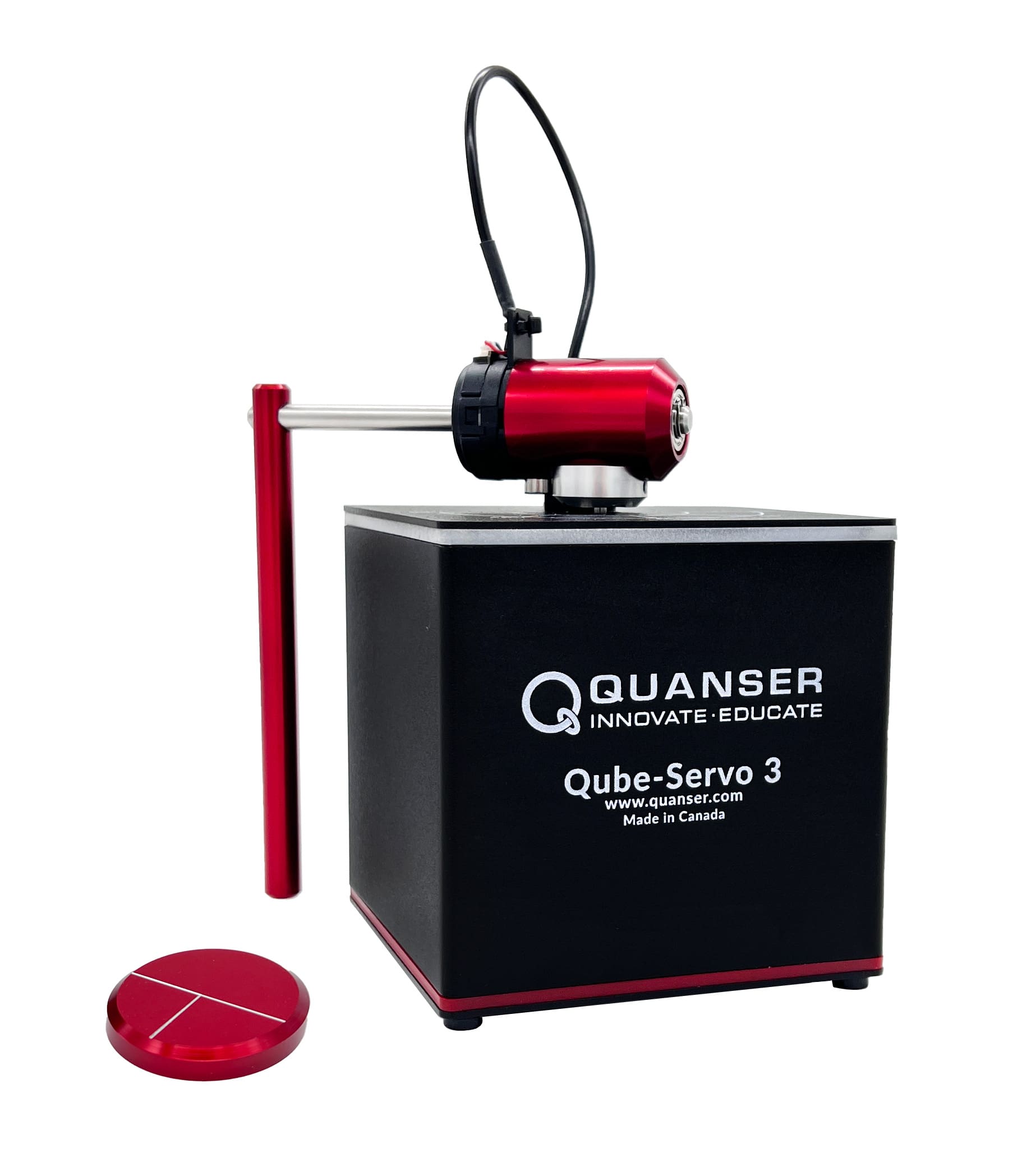
 Rotary servo · inverted pendulum
QUBE-Servo 3 →
A compact introduction to modeling, sensing, and feedback.
Photograph: Quanser
B20 · Mackey Building
Explore control, autonomous systems, robotics, and artificial intelligence. The AI unit connects learning methods to shared physical platforms, with proposed projects and technical webinars.
Progress from a single-motor servo to coupled rotor dynamics and multivariable attitude control.
01 · Model, measure, regulate
Rotary servo · inverted pendulumA compact introduction to modeling, sensing, and feedback.
Photograph: Quanser
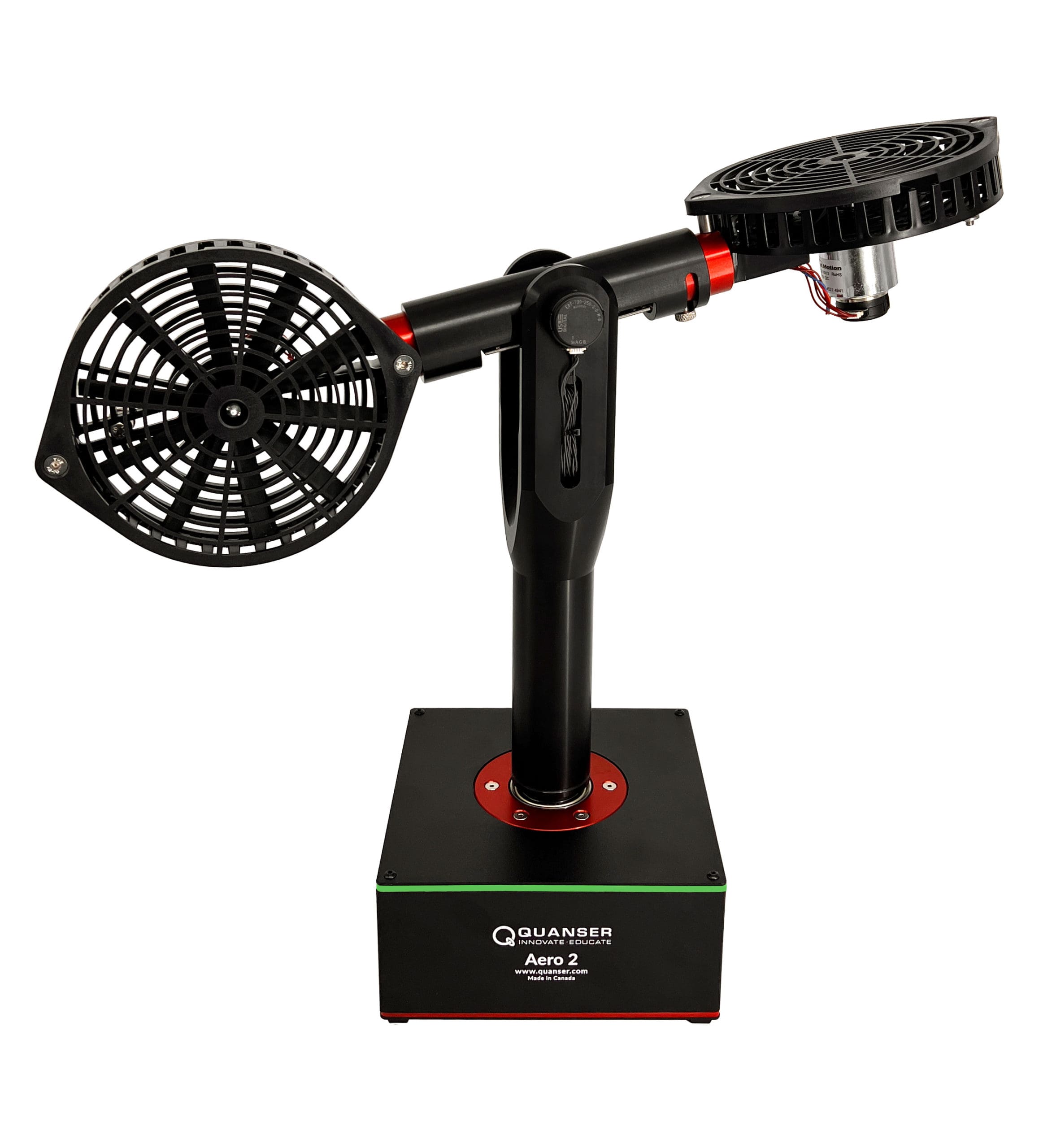 Two motors · pitch & yaw
Explore coupled pitch and yaw through a configurable twin-rotor system.
Photograph: Quanser
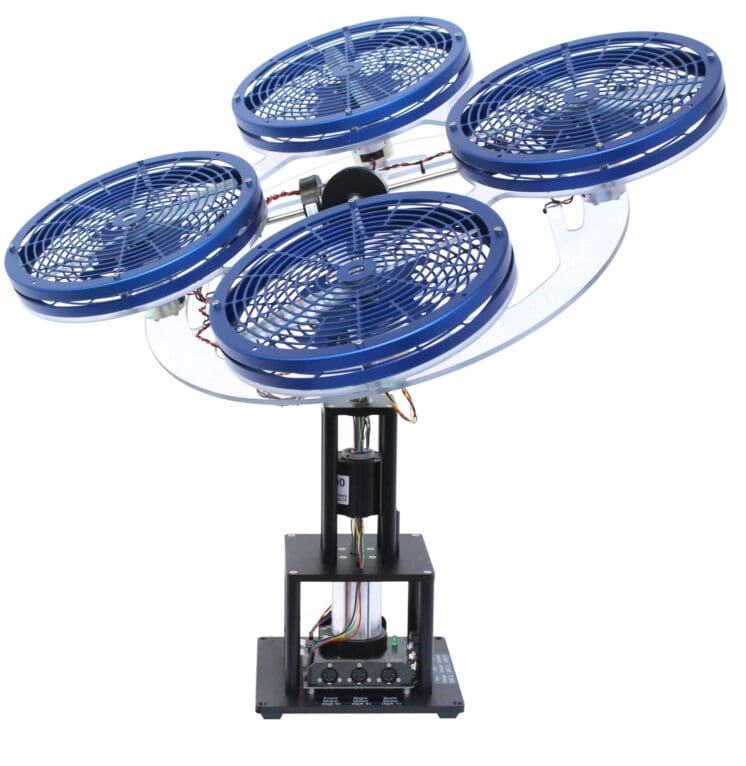 Four motors · three angular outputs
Study quadrotor attitude dynamics on a fixed laboratory rig.
Photograph: Quanser
Connect aerial and ground platforms with onboard perception, motion capture, and a ground-control environment.
02 · Estimate, navigate, coordinate
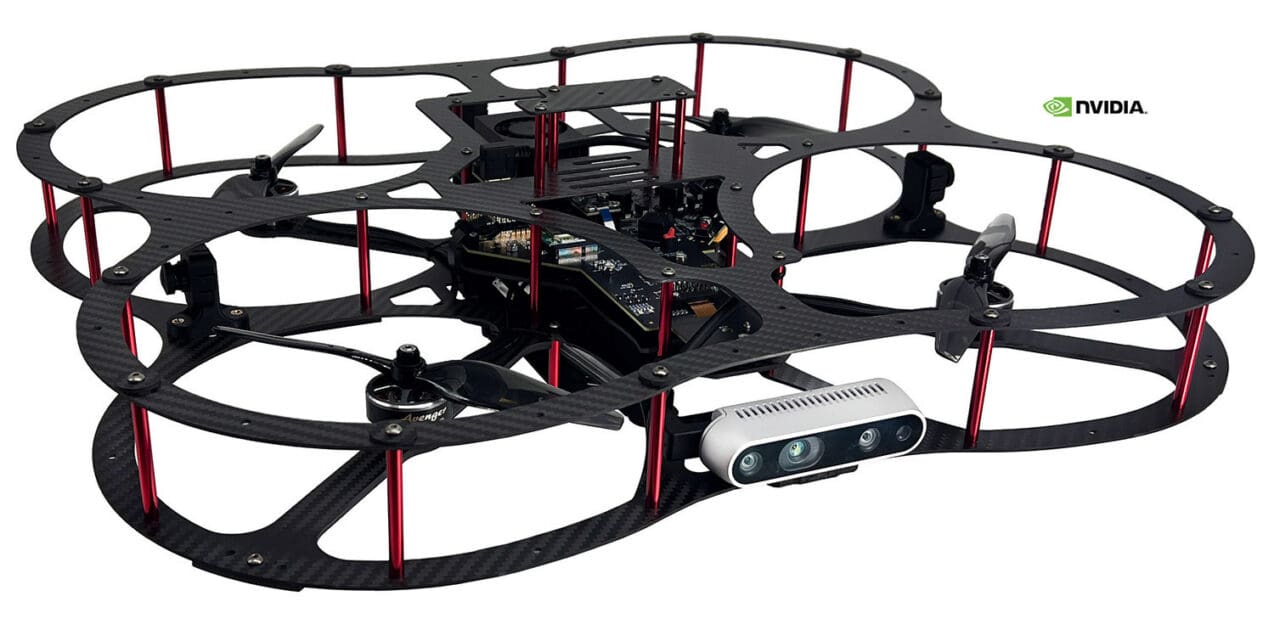 Indoor quadrotor · onboard computing
An indoor aerial platform for perception and autonomous control.
Photograph: Quanser
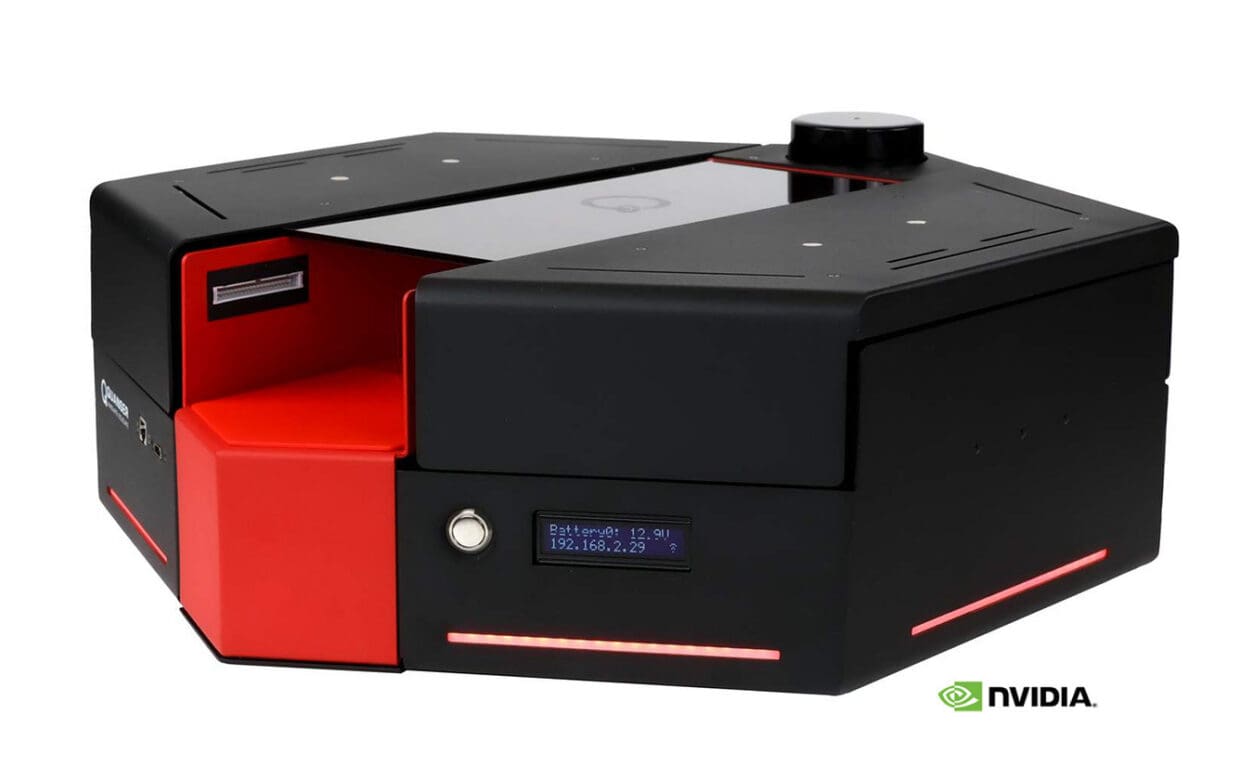 Differential drive · mobile autonomy
Ground robotics from wheel control to navigation and perception.
Photograph: Quanser
Study robot geometry, manipulation, vision, and human interaction with arms and a haptic interface.
03 · Sense, manipulate, interact
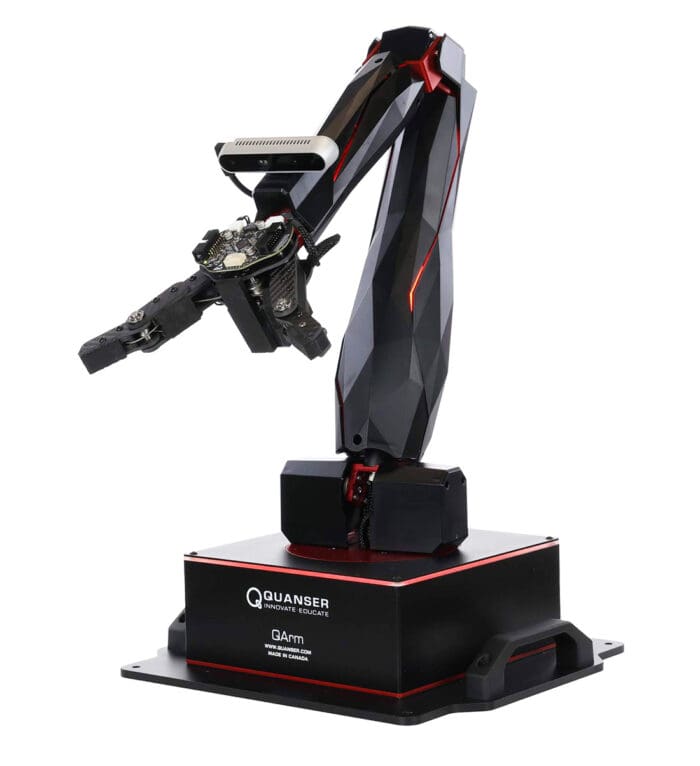 Four arm joints · gripper · RGB-D
Connect robot geometry, sensing, and manipulation.
Photograph: Quanser
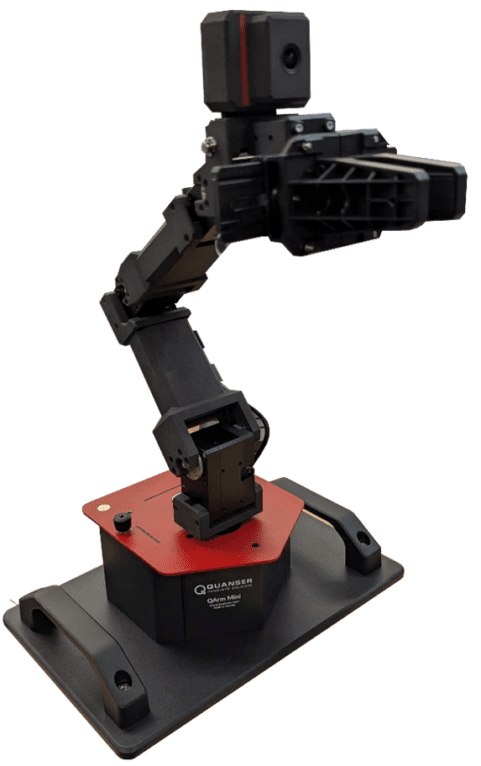 Four arm joints · parallel gripper
A compact arm for visual manipulation and mobile robotics.
Photograph: Quanser
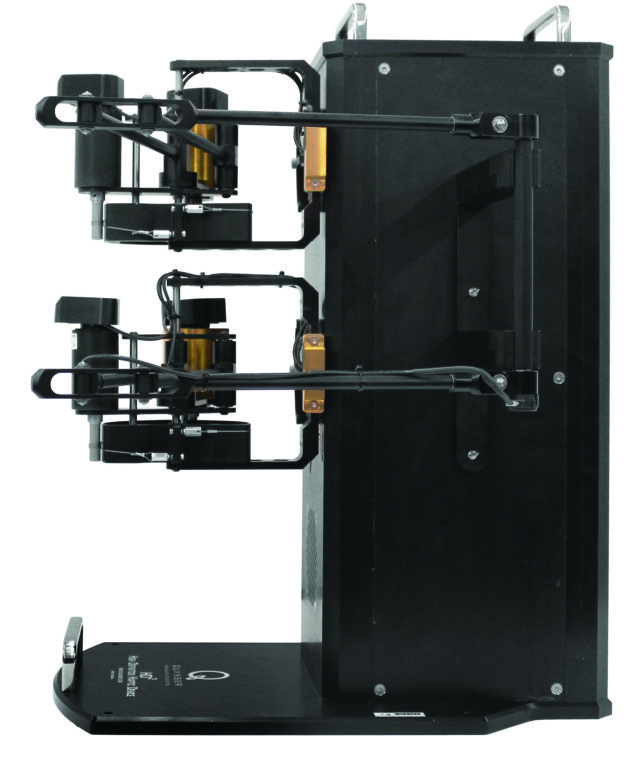 Haptic interaction · teleoperation
Explore human motion, programmable feedback, and teleoperation.
Photograph: Quanser
Connect machine learning and computer vision with QBot Platform, QDrone 2, and QArm. This unit shares the lab’s physical platforms and develops proposed AI investigations through simulation, recorded data, and supervised experiments.
04 · Learn, perceive, evaluate
Four arm joints · gripper · RGB-DConnect robot geometry, sensing, and manipulation.
Photograph: Quanser
Indoor quadrotor · onboard computingAn indoor aerial platform for perception and autonomous control.
Photograph: Quanser
Differential drive · mobile autonomyGround robotics from wheel control to navigation and perception.
Photograph: Quanser
Installed in the Autonomous Vehicles Research Studio to support rigid-body position and orientation tracking.
Prepare in QLabs, develop with MATLAB or Python, and use the supported control workflow for each platform.
Lab-wide orientation, platform training, and approved procedures apply to all hardware work.
Discuss the learning goals, platform, team size, and supervision needed for a practical lab experience.