AVRC Laboratory · 02 · Estimate, navigate, coordinate
Autonomous Systems
Connect aerial and ground platforms with onboard perception, motion capture, and a ground-control environment.
Questions to investigate
Obstacle avoidance and line following
Leader–follower and multi-agent investigations
Explore each platform
Open a guide for component explanations, an annotated equipment figure, learning activities, and official technical resources.
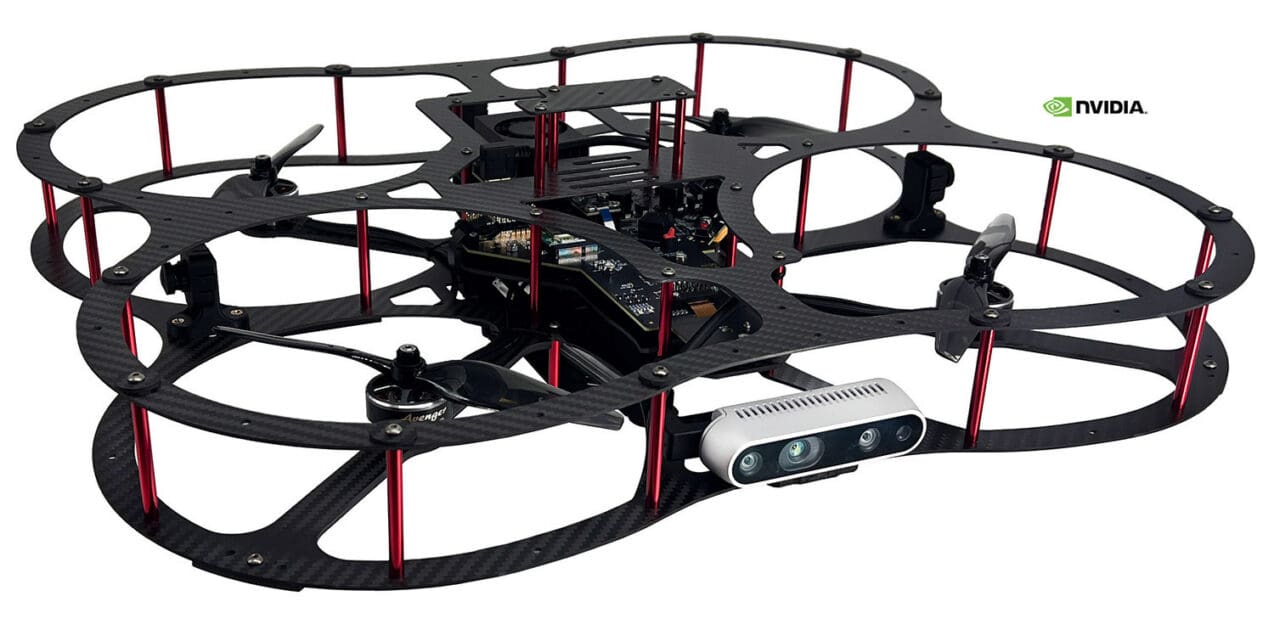 Indoor quadrotor · onboard computing
QDrone 2 →
An indoor aerial platform for perception and autonomous control.
Photograph: Quanser
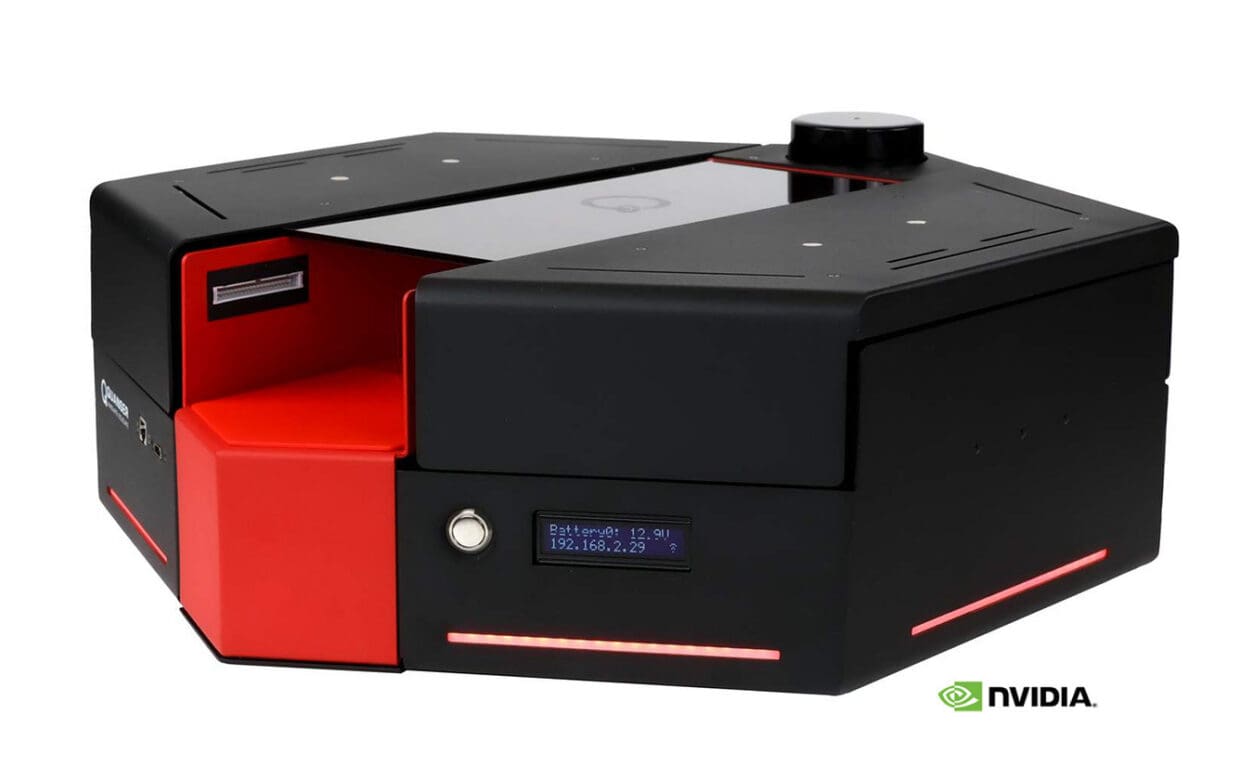 Differential drive · mobile autonomy
QBot Platform →
Ground robotics from wheel control to navigation and perception.
Photograph: Quanser
From 12 cameras to a usable pose estimate
The AVRC Autonomous Vehicles Research Studio has 12 installed OptiTrack cameras. A calibrated camera arrangement and a defined rigid body allow Motive to estimate vehicle position and orientation.
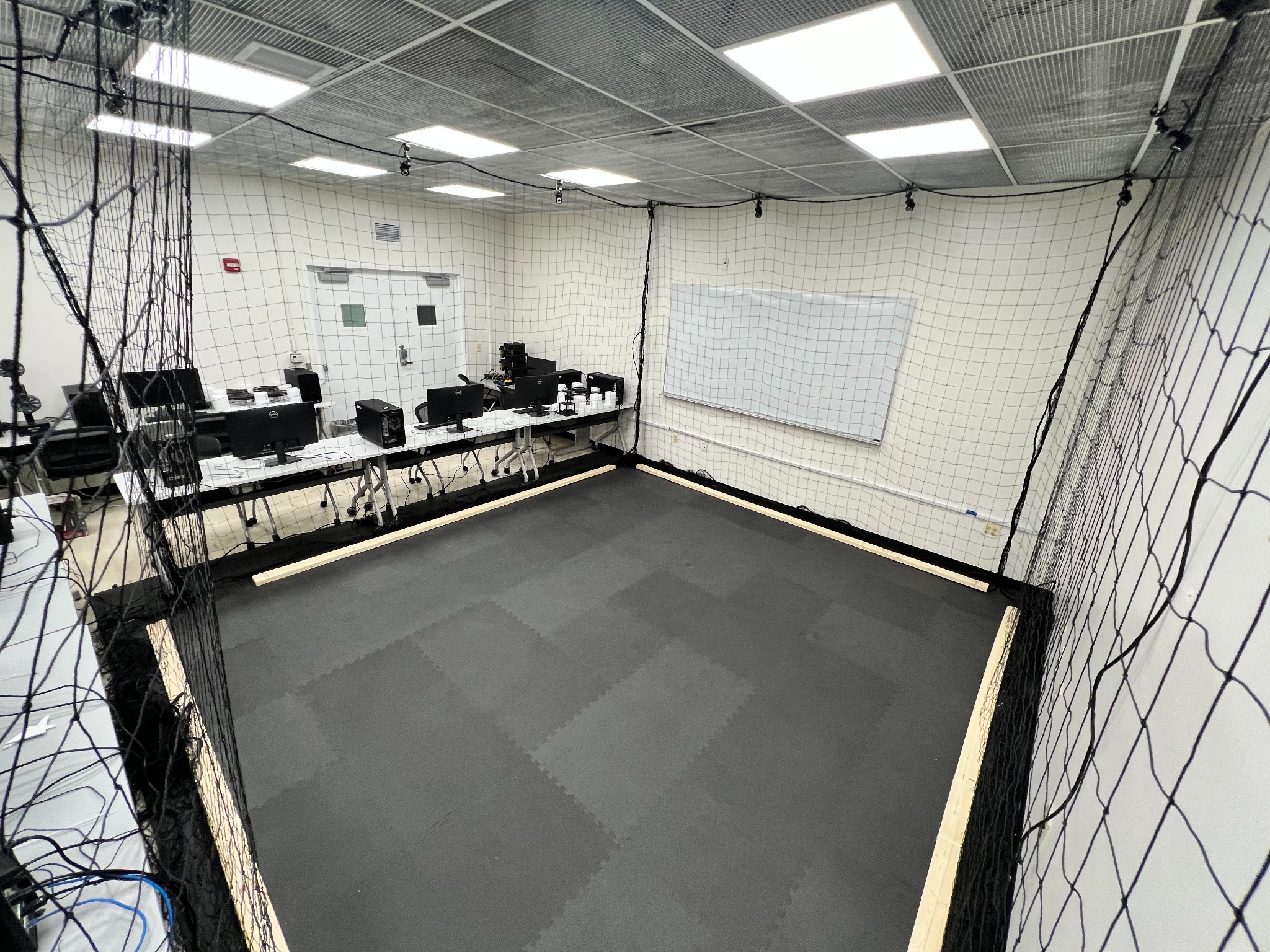
- Cameras & markers
Cameras observe markers within the calibrated tracking volume.
- Motive rigid-body tracking
The configured marker arrangement produces a position and orientation estimate.
- Pose streaming
Motive streams the pose estimate through the interface configured in the selected flight model.
- Ground station
The application receives the pose, applies the required coordinate conventions, and forwards localization data and operator commands to the vehicle.
- Onboard control & telemetry
The supplied QDrone 2 hover example runs a PID-based control model onboard. The ground station monitors the experiment and receives telemetry.
QDrone 2’s onboard RGB, depth, and downward-facing cameras support image-processing and perception studies. Their use depends on the experiment; external OptiTrack localization and onboard camera sensing have distinct roles in the system.
QDrone 2 sensing and interface documentation ↗
Check axis conventions, quaternion ordering, latency, and tracking validity before enabling control. Motion capture supplies an estimate, not error-free ground truth. Communication-loss behavior must be part of the test plan.
A progression for autonomous-systems projects
The mobile-robotics curriculum progresses from task automation to surveying and coordinated tasks. The following applications provide a basis for supervised AVRC projects; objectives and validation are defined for each experiment.
Motion modeling and control
Relate wheel velocities to vehicle motion through differential-drive kinematics. Compare a reference trajectory with measured motion; study hover and trajectory control separately on QDrone 2.
Localization and surveying
Combine measurements to estimate vehicle state, plan routes, and organize search or surveying tasks. Evaluate the effects of coordinate conventions, measurement uncertainty, and communication delays.
Task execution and coordination
Represent a mission as a sequence of tasks, coordinate execution between robots, and investigate leader–follower or cooperative air–ground scenarios. Warehousing exercises provide a context for task queues, search and retrieval, and collaboration.
Bring this unit into your course or project
Faculty and students across Howard’s computing and engineering programs can discuss course, research, VIP, capstone, and senior design activities with AVRC. The instructor and faculty mentor define the learning objectives, experiment, preparation, and assessment.
Bring your course or project to the lab.
Discuss the learning goals, platform, team size, and supervision needed for a practical lab experience.