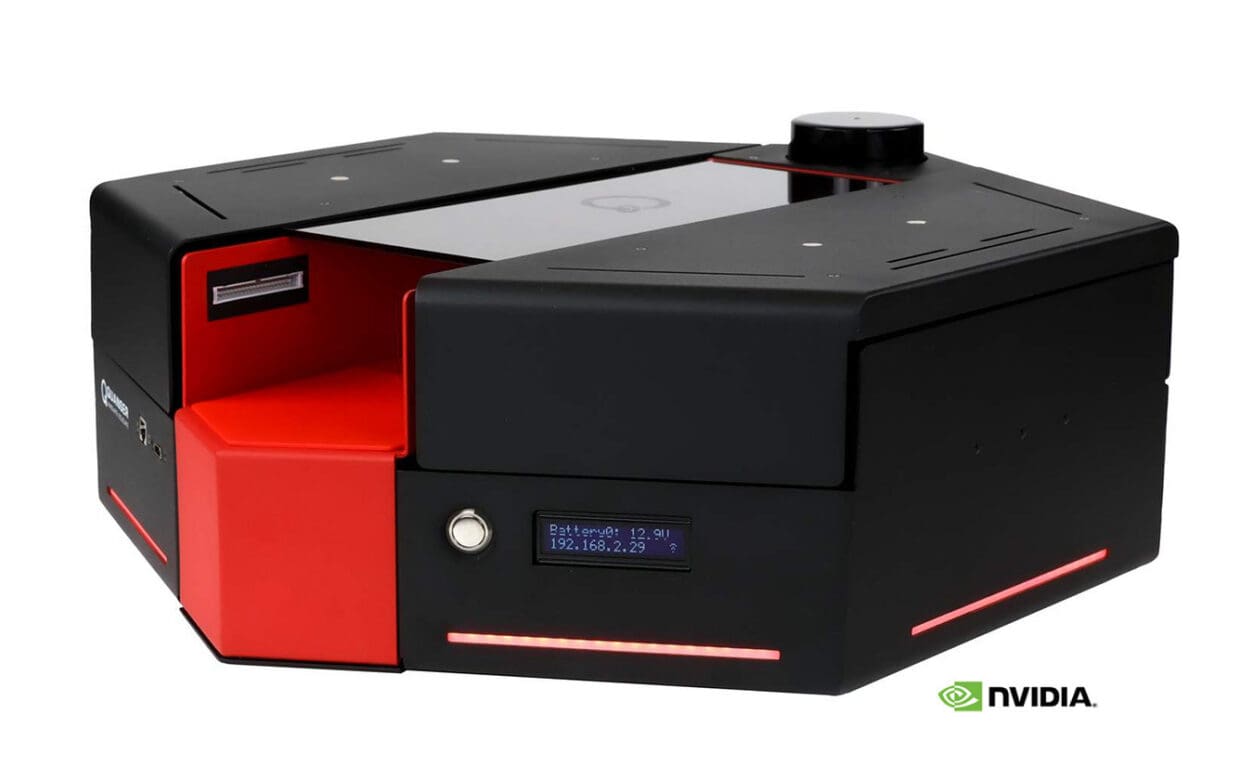
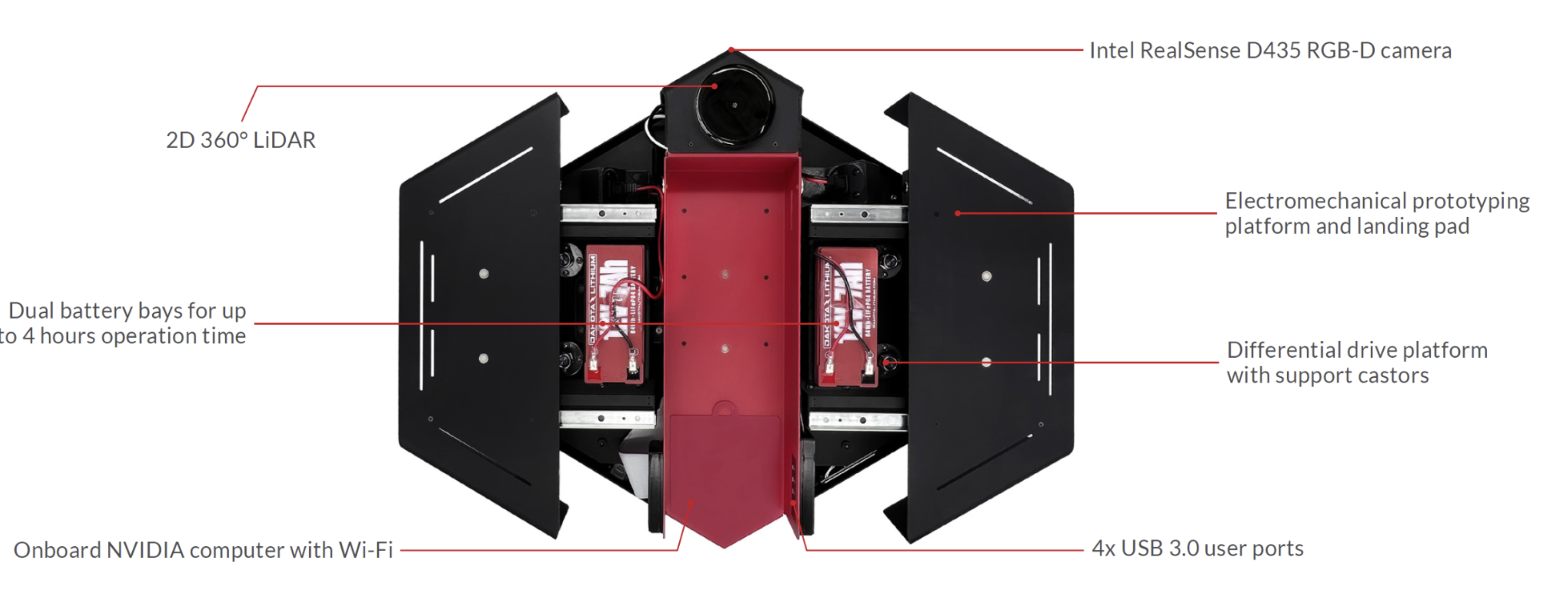
QBot Platform uses two driven wheels and passive support casters. Its onboard computing and sensor suite support mobile-robot control, localization, and perception. A downward-facing camera enables line-following investigations; LiDAR and RGB-D sensing support navigation studies.
Inputs & outputs
Left and right wheel commands generate forward and turning motion. Planar position and heading are estimated states; lateral translation is constrained by differential-drive kinematics.
Suggested AVRC learning activities. Use the linked manufacturer procedure and the instructor’s approved setup for the actual experiment.
A practical learning sequence
Inspect the driving area and establish a low-speed baseline.
Compare wheel odometry with an independent pose estimate.
Progress from line following to an approved obstacle-avoidance or leader–follower task, recording failures as well as successful runs.
Teaching, outreach & research
Teaching: differential-drive kinematics, feedback, localization, and path planning.
Outreach: demonstrate the connection between sensor observations and movement.
Research questions: multi-robot coordination, air–ground cooperation, and mobile manipulation.
Go directly to the source
Official manuals and resources may have their own licensing or sign-in requirements. Use material for the exact platform generation and software release.