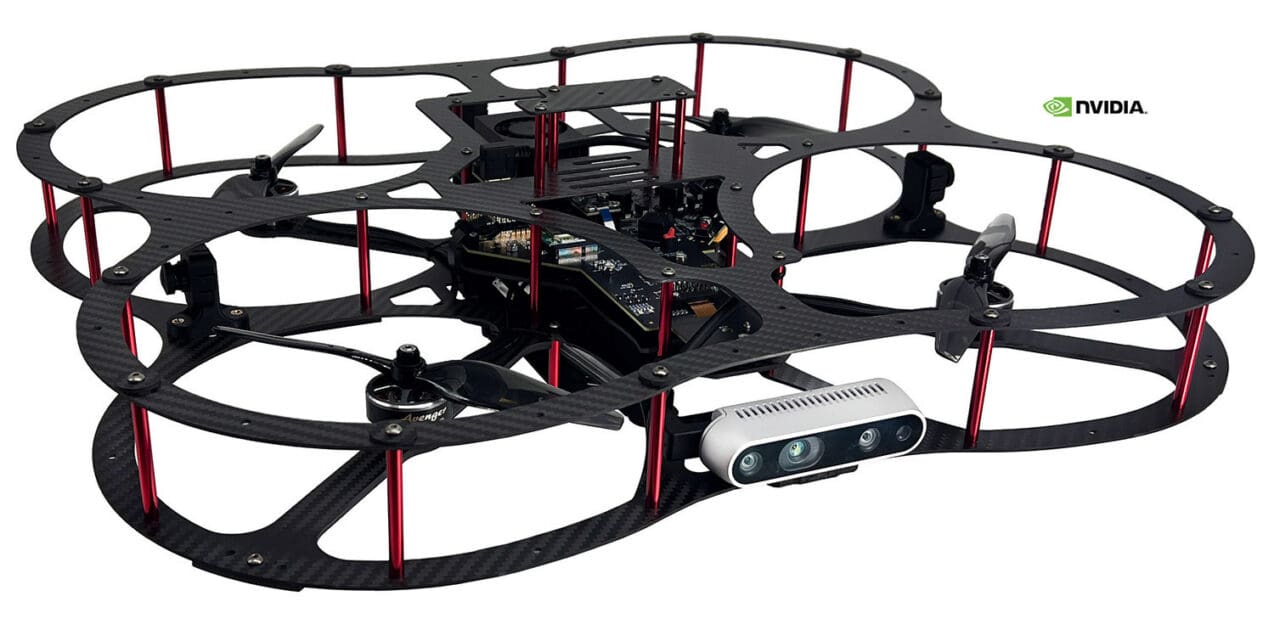
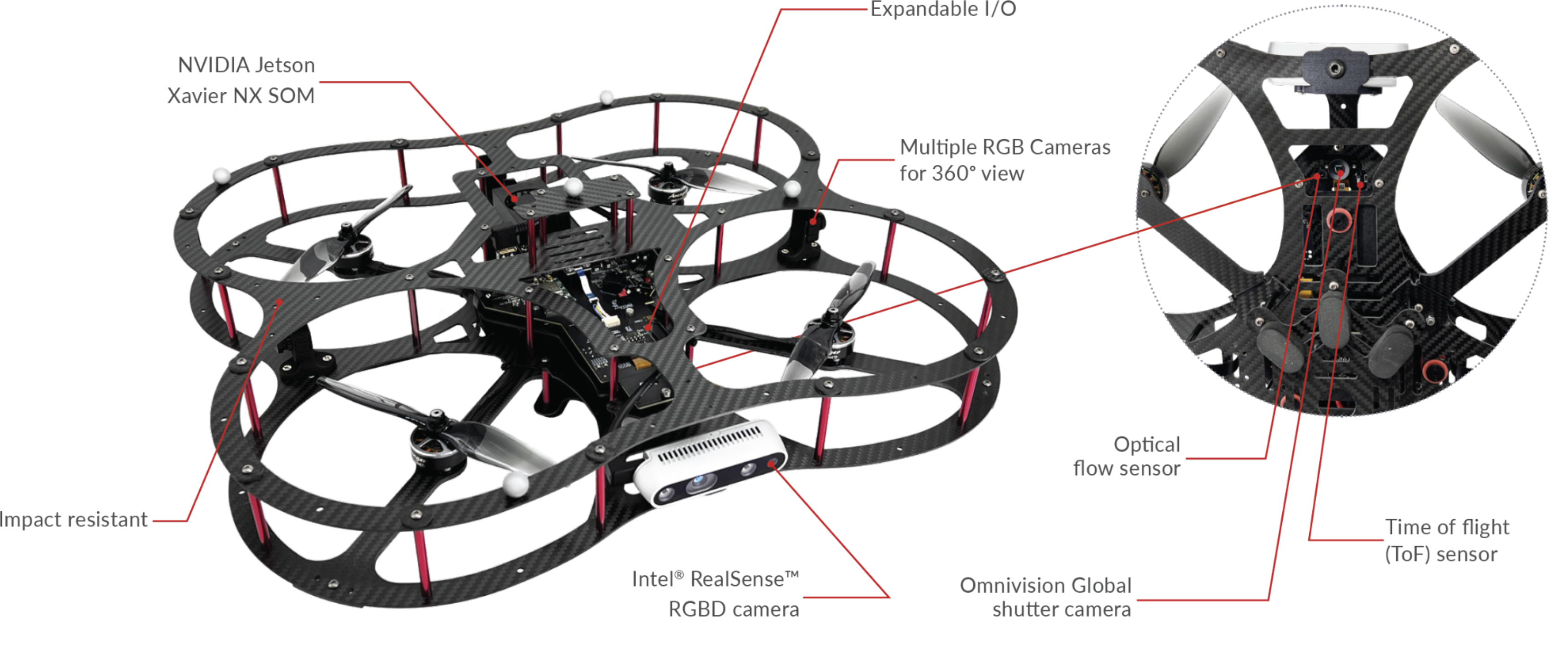
QDrone 2 combines a four-rotor vehicle with an NVIDIA Jetson Xavier NX computer, cameras, inertial sensing, and wireless communication. The AVRC research studio provides an indoor setting for supervised flight and motion-capture-supported experiments.
Inputs & outputs
Motor inputs determine thrust and attitude. Position and orientation are estimated from the configured sensing and motion-capture system; they are not six independent actuator inputs.
Suggested AVRC learning activities. Use the linked manufacturer procedure and the instructor’s approved setup for the actual experiment.
A practical learning sequence
Review the flight-area rules and complete the approved vehicle and battery checks with the supervisor.
Validate localization and reference frames before enabling flight.
Start with the approved baseline hover or trajectory test before considering new navigation or coordination algorithms.
Teaching, outreach & research
Teaching: estimation, flight dynamics, and trajectory control.
Outreach: supervised demonstration of sensing and autonomous motion.
Research questions: obstacle avoidance, leader–follower flight, and air–ground coordination within approved limits.
Go directly to the source
Official manuals and resources may have their own licensing or sign-in requirements. Use material for the exact platform generation and software release.