Howard University · NSF Robert Noyce · RESS
RAOP 2027
Bring robotics research into your teaching.
The Robotics & Automation Outreach Program connects authentic research experiences with classroom-ready professional development for pre-service and in-service STEM educators. The program is hosted by the AVRC Laboratory in the Department of Electrical Engineering and Computer Science, College of Engineering and Architecture, Howard University.
Proposed schedule — subject to confirmation by the RAOP project team. Applications are not yet open.
8 educators
The annual cohort includes pre-service and/or in-service STEM educators.
2 weeks virtual
Prepare with QLabs digital twins, guided inquiry, and technical support.
1 week on-site
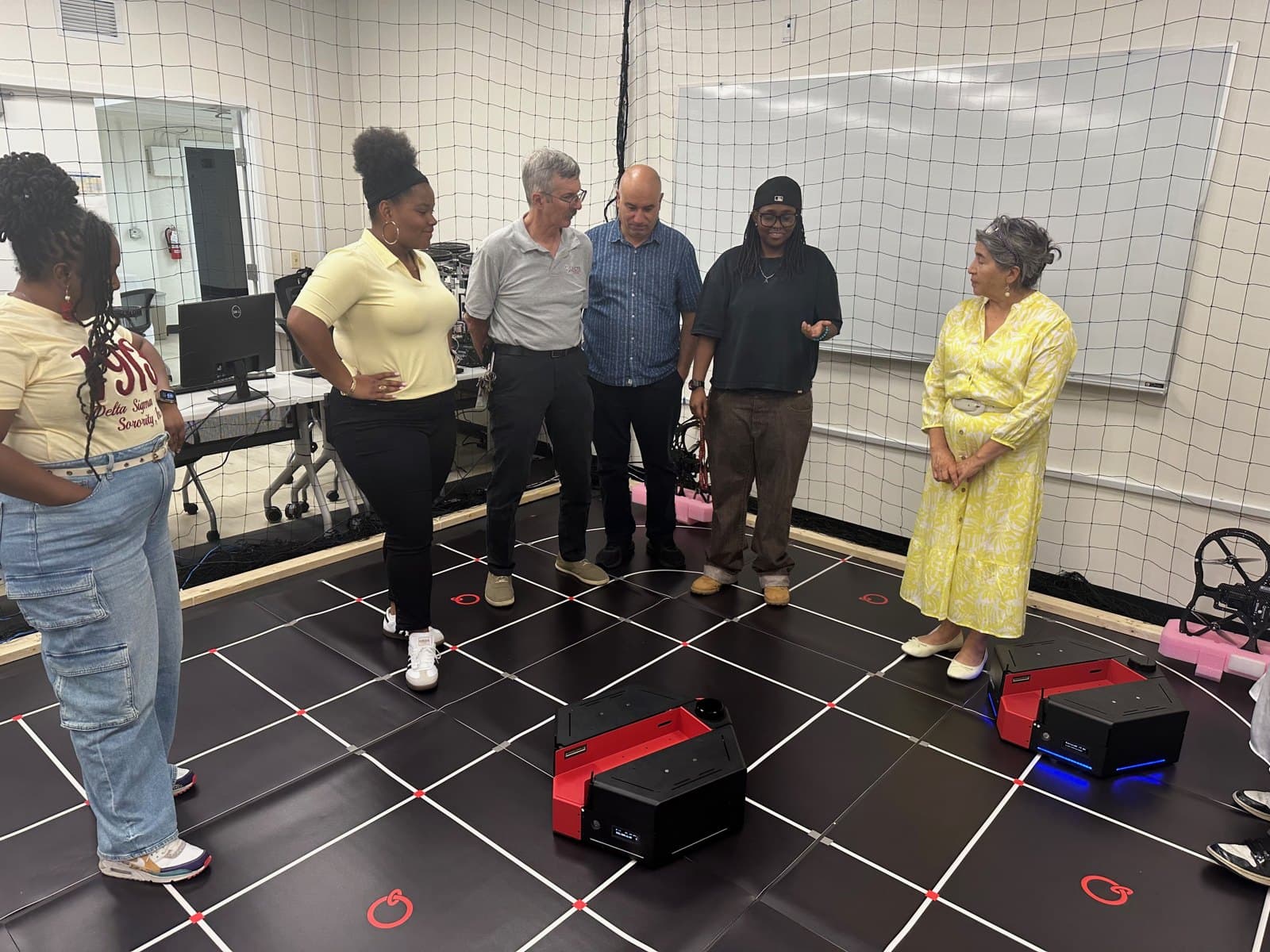
Connect simulation to hardware experiments in Howard University's AVRC Lab.
Participant support: up to $5,900
The budgeted package per educator includes a $1,000 virtual-phase stipend, a $2,000 on-site stipend, up to $2,400 for housing, and up to $500 for transportation and travel.
Housing and travel support are for eligible non-local educators. Support depends on eligibility, program completion, required documentation, and university procedures. Final 2027 arrangements will be confirmed by the RAOP team.
Participant support detailsA pathway from research to the classroom
Explore sensing, feedback control, robotic manipulation, and mobile robotics. Develop a teaching activity that connects your research experience with a course, curriculum unit, or school club.
- Prepare through software onboarding and introductory learning.
- Investigate models and digital twins during the virtual phase.
- Test ideas on physical platforms under faculty and technical supervision.
- Adapt the experience for your students and reflect on implementation.
The program uses the T1–T6 assessment framework to support readiness, learning, educator feedback, classroom translation, and advisory review.
Prepare for the next cycle
Review the eligibility and selection framework, think about a classroom question you would like to explore, and discuss summer availability with your school or program.
2027 eligibility, required application materials, participant support, and final dates will be confirmed in the recruitment announcement.
Next cycle · planning schedule
Proposed 2027 Recruitment and Preparation
Proposed schedule — subject to confirmation by the RAOP project team. Applications are not yet open.
Earlier recruitment gives educators time to plan. The proposed April preparation package provides about two months before June onboarding for introductory learning and access checks.
November 2, 2026 · Proposed
1. Publish the recruitment announcement
Proposed launch of the next-cycle call, with eligibility, participation expectations, and support information.
January 29, 2027 · Proposed
2. Priority application deadline
Proposed deadline for a complete application and supporting documents.
February 1–26, 2027 · Proposed
3. Review and interviews
Review eligibility and program fit; discuss teaching goals, availability, and support needs.
March 12, 2027 · Proposed
4. Selection notifications
Target date for communicating offers and waitlist decisions.
March 26, 2027 · Proposed
5. Confirm participation
Target date for accepting an offer and identifying preparation and access needs.
April 12, 2027 · Proposed
6. Share the preparation package
Provide the guide, preparation activities, and software-access instructions, subject to confirmed licensing. This allows about two months before onboarding.
June 14, 2027 · Proposed
7. Educator onboarding
Review the program, guided inquiry, school teaching goals, and the assessment framework.
June 28, 2027 · Proposed
8. Technical readiness session
Check MATLAB, Simulink, QLabs, and assigned platform resources; resolve access issues.
July 2, 2027 · Proposed
9. T1 readiness checkpoint
Proposed readiness deadline before virtual instruction. Revised cycle-specific forms will be issued.
July 6–16, 2027 · Proposed
10. Two-week virtual phase
Guided digital-twin investigations; proposed T2 submission July 15 and review July 16. Session times will be confirmed.
July 19–23, 2027 · Proposed
11. One-week on-site phase
Supervised platform rotations; proposed T3, T4, and T5 checkpoints on July 23. Advisory review dates will be confirmed separately.
Fall 2027 · Proposed
12. School implementation follow-up
Review activities implemented or planned, available evidence, barriers, and curriculum refinements.
Final announcements will confirm eligibility, application materials, software access, participant support, and session times. Any change will be communicated before the affected deadline.
Explore the first program cycle
See the RAOP 2026 educator guide, blank assessment forms, photos, videos, and opportunities to share educator experiences.
NSF Robert Noyce Teacher Scholarship Program · Research Experiences in STEM Settings (RESS) · Award 2503860 · Principal Investigator: Fadel Lashhab, Ph.D.
Follow RAOP & stay connected
Program updates, announcements, and educator highlights.
Instagram links to Fadel Lashhab’s profile. Some social platforms may require sign-in.