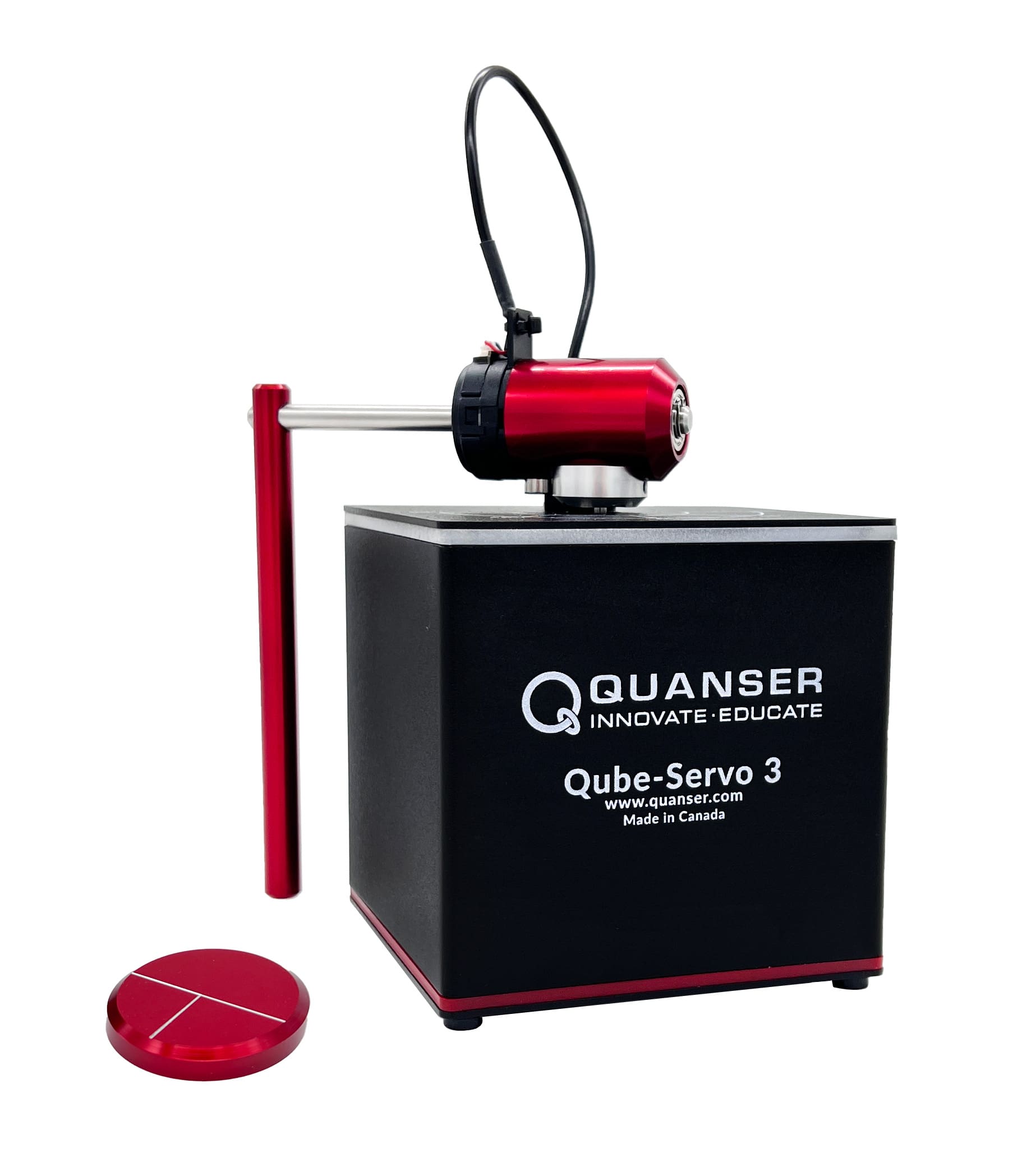
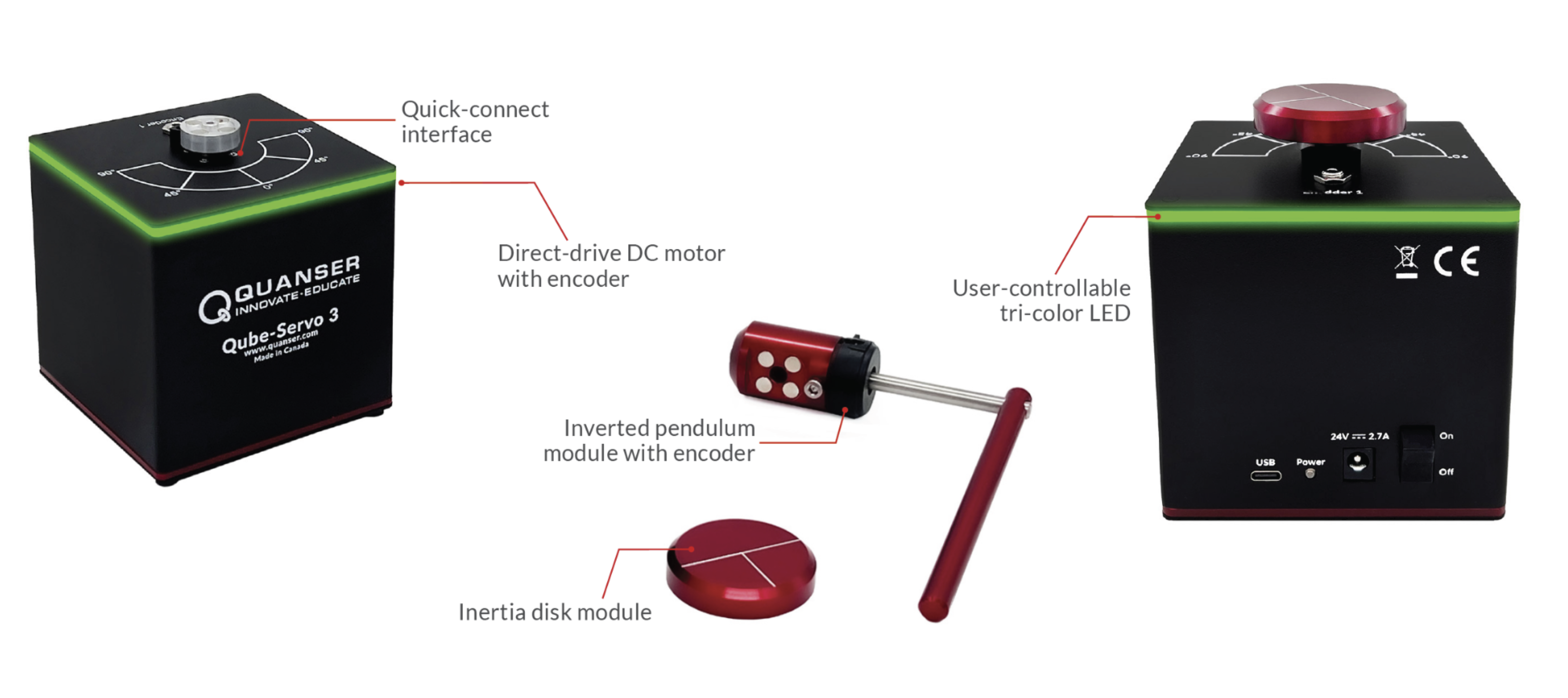
A direct-drive DC motor accepts either an inertia disk or a rotary pendulum attachment. The disk experiment is a single-input, single-output (SISO) position-control problem. With the pendulum attached, one motor must regulate two measured angles: an underactuated system.
Inputs & outputs
One motor-voltage command; disk angle for servo control, or arm and pendulum angles for pendulum experiments.
Suggested AVRC learning activities. Use the linked manufacturer procedure and the instructor’s approved setup for the actual experiment.
A practical learning sequence
Identify the motor command and encoder channels before running the supplied instrumentation example.
Estimate a motor model from a limited, instructor-approved input; compare predicted and measured response.
Compare tracking and control effort for two controller settings. Progress to pendulum balancing only after completing the servo exercises.
Teaching, outreach & research
Teaching: connect DC motor models, transient response, and feedback design.
Outreach: demonstrate why feedback corrects a disturbed position.
Research question: how do saturation, friction, or sampling affect tracking and pendulum balance?
Go directly to the source
Official manuals and resources may have their own licensing or sign-in requirements. Use material for the exact platform generation and software release.